The beard has come and gone in terms of popularity throughout history. The feelings about beards in LDS culture has generally reflected the same trends in the general population. We hear a lot of people make statements like "Brigham Young had a beard, we should be able to as well!" Before we run too far down that road lets take a second to reflect. Yes Brigham Young had a beard for the majority of time that he spent as President of the Church. However, despite a few historical representation stating that Joseph Smith had a "beard of some three days growth" he is traditionally represented as clean-shaven (1).
So what caused the difference in appearance between Joseph Smith and Brigham Young? It's quite simple, the clean shaven look was popular in the early 1800's but this began to change in the 1840's and 1850's. In Sarah Gold McBrides article "Power is on the side of the beard" she states "between the 1850's and the early 1900's, facial hair became a standard component of the adult American male's appearance." So we can see why there is a difference in facial hair between Joseph Smith and Brigham Young.
After Brigham Young's tenure as President of the Church, the next six presidents followed suit with facial hair of their own. This continued until David O. McKay took up the Presidency in 1951. It is important to take note of the timing of this transition from bearded to clean-shaven, because it coincides with another major beard trend in American culture as we will see in part III.
So after Brigham Young, the beard was in style, in LDS culture as well as American culture. Unfortunately, the beard would fall on hard times again with the onset of WWI. The US Military prohibited beards among enlisted men, for good reason, to insure good fits of gas masks while in the trenches. However, this prohibition had some long lasting side effects. As a result of enlisted men having to shave there was a generation who grew accustomed to shaving regularly. Advances in shaving technologies with the Gillette "saftey razor" patented in 1904 and it's wide distribution due to its agreement with the US Army led to a perpetuation of clean-shaven men (2). This was a large contributing factor in the swing from the bearded appearance to the clean-shaven look.
This general transition in American culture also greatly affected LDS perception of the beard. Utah had just been granted state hood and was beginning to integrate itself into US culture. Polygamy had been banned by the Utah Constitution and many of the new leaders were looking for a way to distance themselves with this practice and beards were a very visual way to break with the former practice of polygamy(3). The break with polygamy, service of men in WWI and integration to the greater US culture all affected the LDS perception of the beard in the 1910's and 1920's. These factors influenced the younger leaders of the church who would not pick up the full mantle of leadership until the 1940's and 1950's when a slough of cultural movements in the american culture at large further affect LDS perceptions of the beard.
To be continued...
(1) Roberts, B. H. A Comprehensive History of the Church of Jesus Christ of Latter-Day Saints 2:350. Provo, UT: Published by the Church, Brigham Young UP, 1965. Print.
(2) US Patent 775134, King C. Gillette, "Razor", issued 1904-November-15
(3)Hickman, Michael. "Mormons: A Short History on Beards." Michael A Hickman. 28 Mar. 2013. Web. 16 Oct. 2015.
Wednesday, October 21, 2015

Tuesday, September 29, 2015
The Beard Card, Part 1

Image 1 - Photo of a BYU student disguised as the elusive Beard Card
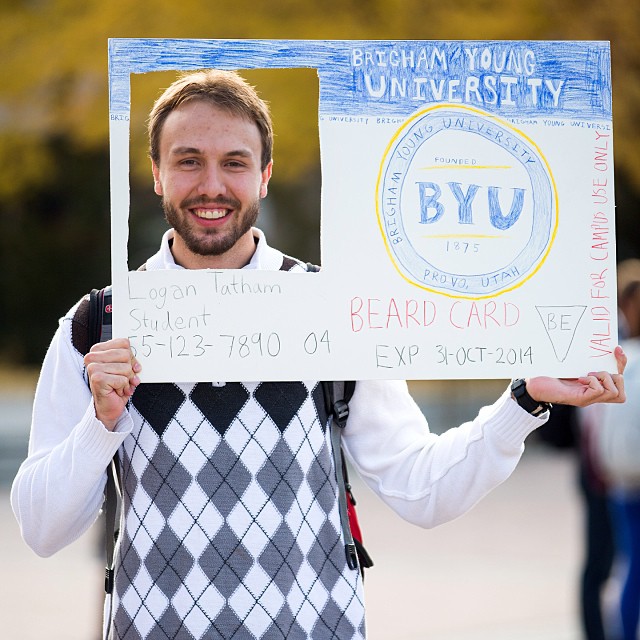
Have you ever wondered what it takes to get a beard exception endorsement for a skin condition at BYU? It is not a simple process, but it is one of the few ways to grow a beard with approval at BYU. It is not worth listing the entire process, but I will list the initial the requirements, as posted by BYU on their website (Beard Statement on BYU Website):
1.) The beard exception is not granted by the Student Health Center. The purpose of the appointment is to enable the doctor to confirm the presence of a serious skin condition. Since the physician is charged with the responsibility of actually seeing the presence of the skin condition, this observation can best be made if the patient has shaved every day for at least three days prior to the appointment. The patient's medical history alone is not sufficient.
2.) The patient will be charged for a doctor's appointment whether or not a serious skin condition is diagnosed. Therefore, it is in the patient's best interest to make sure the condition is present and visible enough for the doctor to make the diagnosis based on physical findings at the time of the visit, rather than solely on the basis of the patient's medical history.
3.) If the doctor is able to make the diagnosis based on the physical findings at the time of the appointment, he/she will notify the Honor Code Office of the diagnosis and make a recommendation relative to a beard exception. The Honor Code Office will notify you of the decision.
4.) Once you have completed your exam with the doctor, you will need to report to the Honor Code Office to complete the process.
I often have wondered why this is the case. It seems to say that no other doctor besides those employed at the BYU health center could diagnose a skin condition. I find that this process is especially redundant for those renewing their beard card. They have to complete this process every year. Though they have already been to the BYU health center and had a BYU doctor document their condition the previous year.
The whole process is a waste of resources for the University and students and should be changed. The entire beard rule is outdated and no longer serves a purpose, but at the very least, they should make a better system for getting an exception.
Monday, September 28, 2015
Beards are Back
Beards are a natural
part of life. However, the beard has had a turbulent history. Being punished
for having or not having a beard has been a problem for many men throughout
history. For example in 1698, Peter I of Russia commanded his court to shave
their beards. Any subject wanting to keep a beard was forced to pay a tax, as
well as wear a medallion stating that "beards are a ridiculous
ornament." Elizabeth the I of England also took a similar approach in the
taxation of beards taxing them according to their length.
The modern beard
has had its own changing symbolism. From being abhorred in the early 1800's to
socially accepted in the late 1800's and back to clean shaven looks during the
World Wars and then used as a counter culture symbol in the 1960-70's. So what does
the beard mean now?
Recent Studies have
shown that modern beards are making a comeback. In a 2008 study by Nick Neave
and Kerry Shields (Study) they found that men with light
stubble or light beard are perceived as more attractive by women and full
beards are perceived as the most socially mature and masculine.
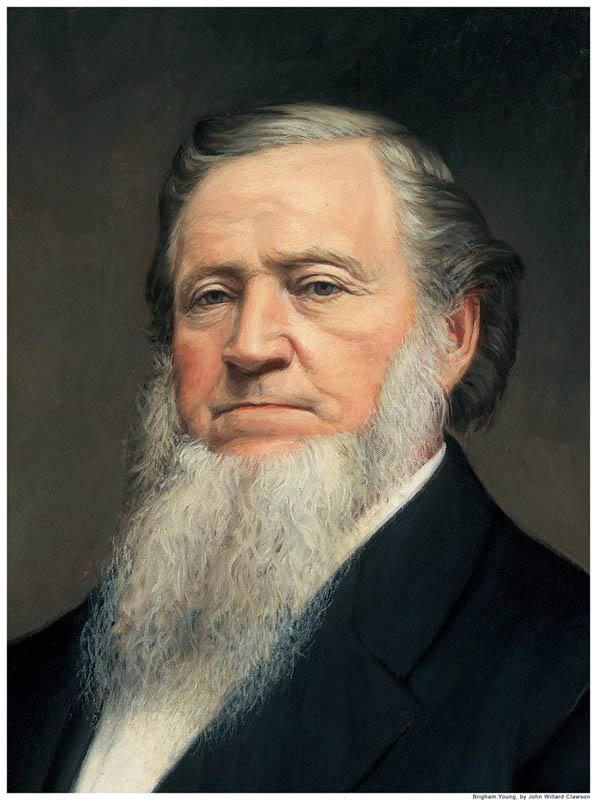 |
Painting
of Brigham Young,
the
founder and namesake of
Brigham
Young University.
Notice the striking beard |
Despite new finding and
changing attitudes among the younger generations there are still some holdouts
to new view. Brigham Young University for example has an Honor Code which
explicitly states that "Men are expected to be clean-shaven; beards are
not acceptable." (Honor Code)
Most of the hold-outs
come from conservative groups, led by conservative men who were reactionists to
the counter culture of the 60's and 70's. They wanted to distance
themselves from the "Hippies" of the time period. Conservative
leaders want to maintain a visual separation between themselves and the counter
culture. This is why conservative groups such as BYU, the banking
industry at large and military schools (though their reasoning is a little more
complicated), continue to hold onto “no beard” policies. They are a vestige of a time gone by of the
conservative counter revolution from 50 years in the past.
While there are still
some holdouts, the beard is back. There will always be varying values and
opinions of the beard. But that is the beauty of it. It is a way to express
oneself, and therefore should be left up to the individual and not regulated or
controlled by any institution. Beards now symbolize many good things in
our society, such as maturity, attractiveness, and trust. With so many
things going the beards way, let’s get it back to BYU as a powerful tool to
express our commitment to social maturity, attractiveness and trustworthiness!
Subscribe to:
Posts (Atom)